"We're not here to mess around..."
In 2025, consulting firm EY-Parthenon analyzed the Universal Registration Documents (URDs) of the 50 largest French listed companies — some 23,000 pages analyzed, with artificial intelligence to the rescue. The study's objective was simple: Can a shareholder, a potential investor, form a well-founded opinion on a company's strategy and its implementation by reading its URD? The straightforward answer: yes for governance, much less so for strategy.
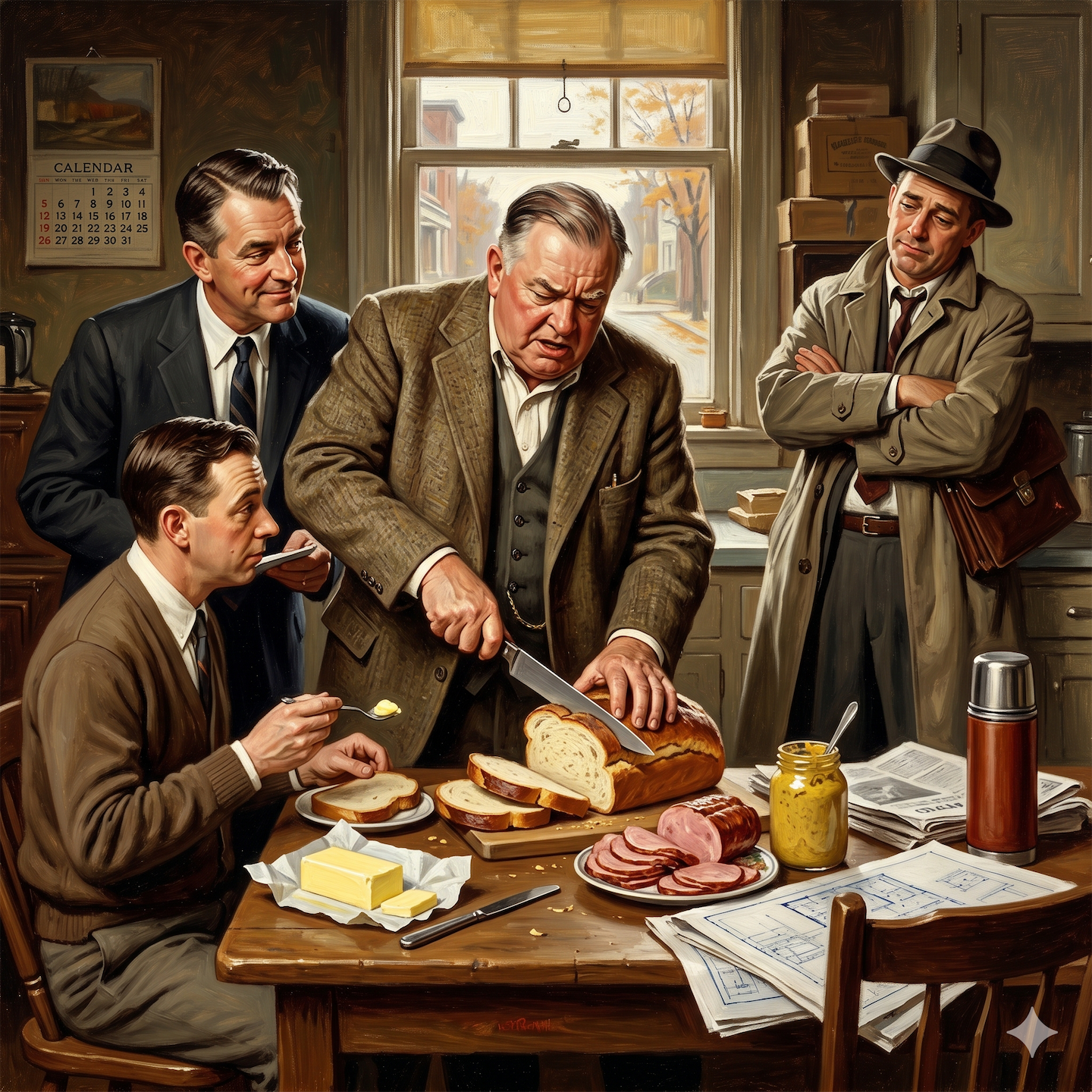
In 'Les Tontons Flingueurs', Raoul Volfoni proclaimed, "we didn't come here to butter sandwiches," and then we discovered what their strategy was. However, upon reading the URDs, one sometimes wonders if some companies haven't confused strategic communication with canapé toppings.
The URD, this monument of… partial utility
With an average of 460 pages — and up to 734 for the most verbose — one might think the mission accomplished. URDs excel in shareholder structure, board composition, meeting attendance rates, and financial and extra-financial data. On strategy, however — its clarity, its monitoring indicators, the link between stated ambitions and achieved results — there's a slight hitch.
60% of companies declare a duly named and dated strategic plan — Ambition 2026, Roadmap 2030 — the form is polished, the direction outlined, but flight plans are almost non-existent. And when looking for quantified commitments, the situation worsens: an average of 2.3 one-year indicators, overwhelmingly financial. At three to five years, indicators multiply… but 90% concern ESG commitments. Beyond that? CO2 emission targets, and that's about it.
Conclusion: listed companies seem more comfortable promising carbon neutrality by 2050 than explaining how they will create value in the next three years. Antoine de Saint-Exupéry said it before anyone else: "a goal without a plan is just a wish." Stock market sanctions for unmet ESG targets being, shall we say, more… deferred.
Five levers to reconcile strategy and governance
Beyond the URD alone, it is the congruence between the board, the CEO, and the executive committee, and how they articulate the company's strategy, that builds investor confidence. Five levers can help build it.
1. Tell the strategy's story — truly.
Not a catalog of strategic pillars stacked like Lego bricks, but a coherent narrative, shared by all, adaptable for investors, employees, and the media, but without revealing the detailed roadmap to competitors. This is a demanding and delicate exercise. It assumes that the board and executive management have first agreed on the substance — which is not always a given.
2. Quantify without getting bogged down.
Strategic discussions at the board level cannot be limited to reviewing a multi-year budget. They must include a review of scenarios, market assumptions, alternative plans — and a few indicators dedicated to strategy monitoring, coupled with objectives. Not fifty. Three or four, well-chosen, tracked year after year. This isn't revolutionary. It's simply what any serious investor has a right to expect.
3. Assemble a board equal to the challenges.
The boards of French listed companies heavily favor financial experts and governance generalists. However, in an economic and technological environment that is rapidly reconfiguring itself, a board without sector experts, without digital or artificial intelligence specialists, is a board that risks missing major strategic issues. The speed of competitive dynamics and technological developments also calls for reflection on the pace of director renewal to ensure the right skills are available at the right time.
4. Align management with strategy: the CEO's role.
Any significant strategic shift must be accompanied by a review of the company's organization, the distribution of responsibilities, its steering indicators, and executive incentives. Understanding these elements is key to investor confidence in the company's ability to successfully implement the announced strategy. The CEO's personality and public statements are crucial. As 'Les Tontons Flingueurs' would say: "they'll see who Raoul is." This link between strategy and management model, and the modalities of alignment between shareholders and managers, remains largely absent from URDs — and sometimes from board discussions.
5. Know the executives well to prepare for succession.
A board that poorly knows its executive management members is ill-equipped to prepare for transitions — precisely when strategic continuity is most critical. Only 64% of the companies in the panel mention structured exchanges between the board and executive management. The remaining 36%… keep it a mystery.
Communicating without revealing (too much): the impossible equation?
Sun Tzu advised to "attack the enemy when he is unprepared." General management seems to have learned this lesson — sometimes with a zeal bordering on excessive caution.
The real question isn't whether listed companies should disclose everything. They never will, and that's understandable. It's whether they can do better to convince investors of the relevance and effectiveness of their strategy — without handing over their roadmap to competitors. Communicating objectives based on a few key strategic indicators and tracking them adds credibility to the strategic narrative. Churchill had a saying for this: "However beautiful the strategy, you should occasionally look at the results."
The markets, however, don't forget.